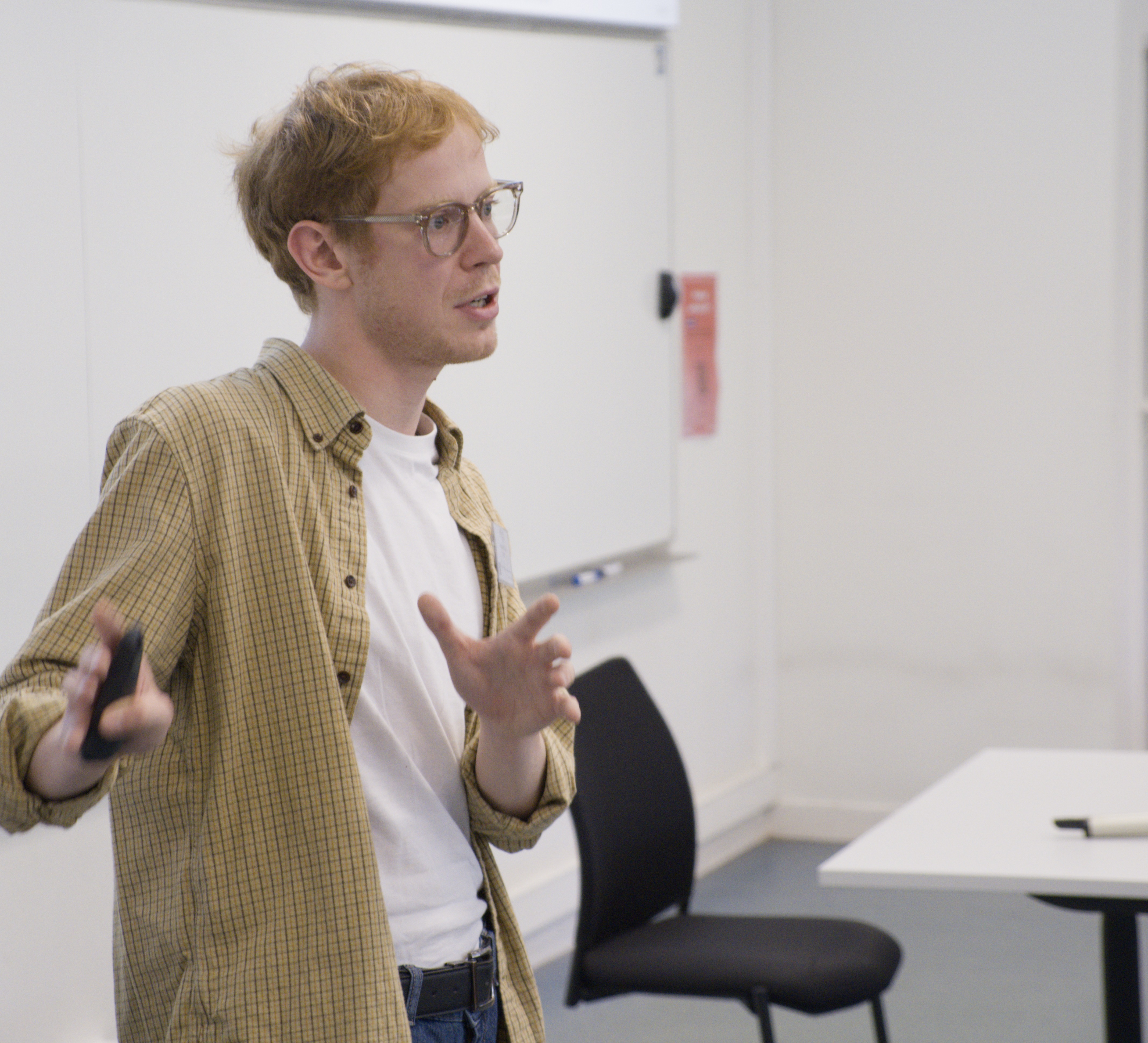
Matéo Moglia
I am a 4th-year PhD candidate at CREST and Ecole Polytechnique, advised by Pierre Boyer and Benoit Schmutz-Bloch. I am an structural microeconomist, with interest in public economics, urban economics, and environmental economics. My research addresses questions related to population ageing, climate migration, real estate, and urban renewal.
I hold a MPhil. in Economics from ENS de Lyon. During the Summer 2025, I visited the Berlin Quantitative Spatial Group, sponsored by Gabriel Ahlfeldt. During the Spring 2026, I visited the Wharton School, sponsored by Gilles Duranton.
Join us for the 2nd CREST Urban Economics PhD Workshop, on December 10 and 11. Programme and registration link here!
I am on the 2026-2027 job market.
Job Market Paper
The Hidden Costs of Urban Renewal
Presentations: 2026 Urban Economics Association (Barcelona), Aix-Marseille School of Economics seminar, 2026 HEC PhD Conference, 2026 AFSE Annual Meeting (Nantes), 2026 Berlin Quantitative Spatial Economics Workshop, 2026 Real Estate and Urban Economics Conference (Lugano), CREST Internal seminar, Economics of Housing Policy Workshop (Rotterdam), 2026 CREST Urban Economics PhD Workshop (Paris)
Working Papers
-
The Spatial Impacts of Population Ageing
Rich countries are ageing and will all soon lose population. This paper examines the impact of this major demographic shift on welfare and inequality by taking into account its wide spatial heterogeneity. Using administrative data on population, housing markets, and local public finance in France, I reveal a new trade-off related to population ageing: an increase in housing costs and in local tax revenues. I build and calibrate a quantitative spatial model in which households differ in terms of skill, age, and family size. I then use this model to run counterfactual experiments based on demographic forecasts. The results show small positive impacts on welfare albeit with an increase in spatial inequalities.Presentations: 2025 Association Française des Economistes de la Population (Marseille), CREST Internal seminar, 2025 RIEF Doctoral Meeting (Marseille), 2025 Doctorissimes (PSE), 2025 European Economic Association Meeting (Bordeaux), 2025 Conference on Regional Economic Inequalities (Berlin)
-
Age-Specific Response to Climate Change Draft soon
Soon.Presentations (incl. by co-author*): 2026 Association Française des Economistes de la Population* (Strasbourg), PhD Workshop in Urban Econmics (HEC), CREST PhD Seminar*
Teaching
-
Introduction to Economics (Engineer)Teaching Assistant · Ecole PolytechniqueSpring 2026
-
Introduction to R and Stata (Master)Teaching Assistant · Ecole PolytechniqueFall 2025
-
Introduction to Economics (Bachelor)Teaching Assistant · Ecole PolytechniqueSpring 2024–2025
-
Quantitative Methods for Social Science (Master)Instructor · Ecole Normale Supérieure de LyonSpring 2023
References
Gabriel Ahlfeldt
Professor of Economics, Humboldt University
Pierre Boyer
Professor of Economics, CREST & Ecole Polytechnique
Gilles Duranton
Professor of Economics, The Wharton School (University of Pennsylvania)
Benoit Schmutz-Bloch
Professor of Economics, CREST & Ecole Polytechnique
Miscellaneous
Data replicator
The Journal of Political Economy, The Economic Journal, the Econometrics Journal
Other activities
- Organiser: CREST PhD Urban and Spatial Workshop (2025, 2026), Economics Days @ ENS de Lyon (2023)
- ENS de Lyon then CREST student representative (since 2019)
Personal
Outside research I enjoy listening to funk and jazz music, and playing the bass.